Viktor Powell · 2 September 2026
Blue oaks, or Quercus douglasii, form a key component of California's foothill woodlands and support diverse wildlife through acorns and canopy cover. Recent multi-year droughts have placed increasing pressure on these populations, altering growth patterns and regeneration across the Central Valley and Sierra foothills.
Impacts on Growth and Survival Rates
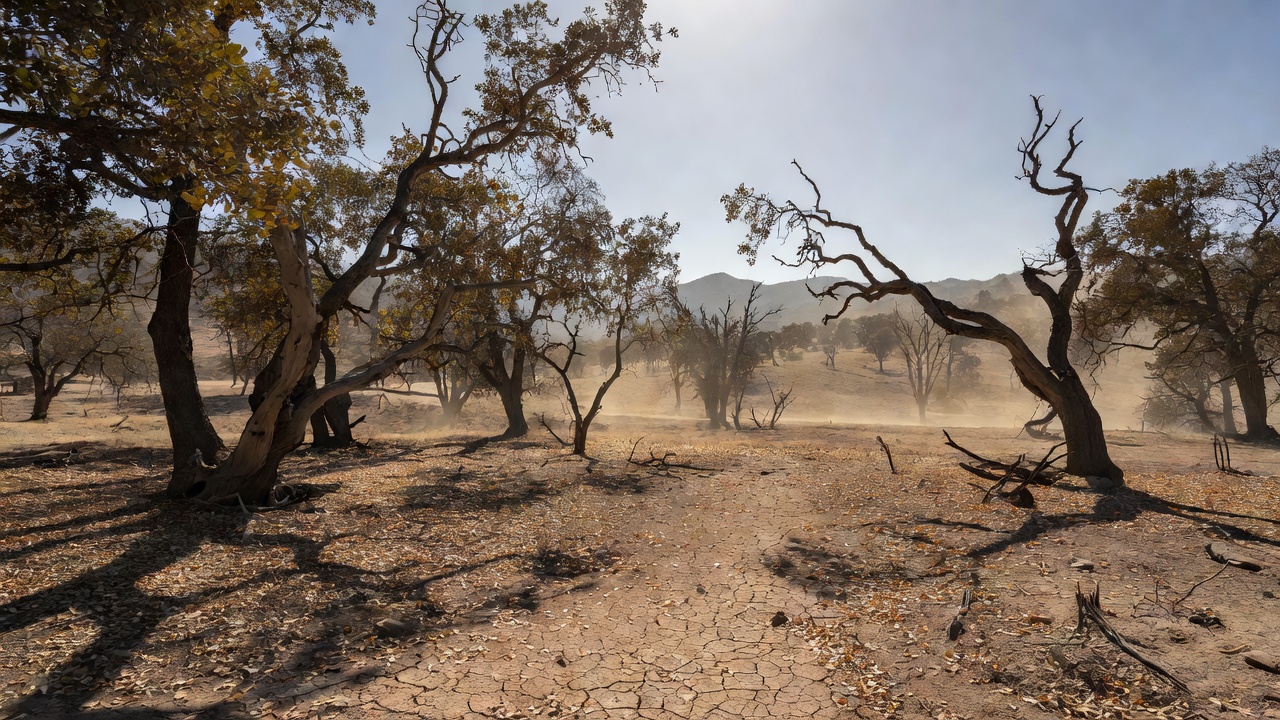
Extended low-rainfall periods reduce radial growth, as shown by narrower tree rings in drought-stressed stands. University monitoring data reveal mortality rates reaching 15-20 percent in affected areas during the 2012-2016 drought. Water deficits weaken defenses against insects and fungi, accelerating dieback. Seedling establishment remains low because surface soils dry rapidly, limiting root development before summer heat arrives. Mature trees draw from deeper aquifers, yet successive dry years deplete these reserves and push individuals past physiological thresholds.
Acorn production also declines sharply under drought, reducing the seed bank available for natural recruitment. Researchers note that stands with higher canopy density suffer greater losses, as competition for limited soil moisture intensifies.
Ecosystem Consequences and Management Approaches
Blue oak decline affects numerous species that rely on mast crops and shaded understories. Reduced forage availability can shift deer and bird distributions, while diminished leaf litter alters soil invertebrate communities. These changes may cascade through food webs and influence fire regimes as dead wood accumulates.
Land managers now prioritize restoration using locally adapted seed sources and test assisted migration to higher elevations. Remote-sensing tools track canopy health at landscape scales, enabling targeted interventions. Partnerships among agencies, tribes, and ranchers promote grazing practices that reduce competition from invasive grasses. Long-term resilience depends on coordinated drought monitoring and habitat connectivity to allow gene flow among remaining populations.