Ines Albrecht · 2 September 2026
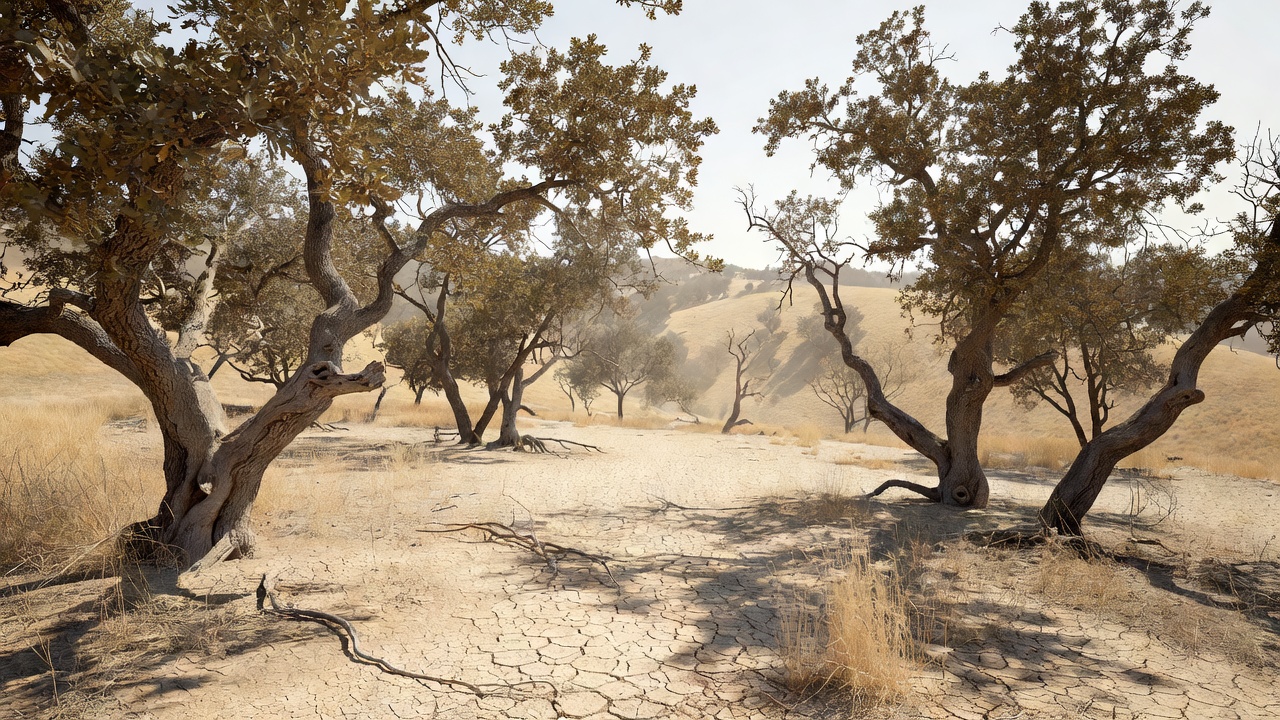
California's blue oak woodlands, which span millions of acres in the state, face mounting pressure from extended periods of drought that have become more frequent and intense over recent decades due to climate variability. Researchers from various universities and government agencies monitoring these ecosystems report significant declines in tree vigor across the central valley and coastal ranges.
Physiological Responses to Water Scarcity
Blue oaks exhibit several adaptations to dry conditions, including deep root systems that access groundwater and deciduous leaves that reduce water loss during summer months. However, the multi-year droughts of the 21st century often exceed these natural tolerances. Data from long-term monitoring plots indicate that trees experience reduced photosynthesis rates and increased embolism in their xylem vessels during severe water deficits, leading to higher mortality. Some stands have lost up to 25 percent of mature individuals since the beginning of the prolonged dry period starting in 2012.
Acorn production, which is crucial for natural regeneration of the species, has also suffered considerably. Mast seeding years occur less frequently, and the survival rate of seedlings drops sharply in the absence of adequate soil moisture during critical growth periods. Scientists have noted that younger trees and saplings are particularly vulnerable to these conditions, potentially leading to long-term shifts in the age structure and density of blue oak populations throughout their range.
Implications for Biodiversity and Land Management
The ongoing decline of blue oaks has ripple effects on numerous dependent species, ranging from acorn-dependent birds like scrub jays and woodpeckers to various insects and larger mammals that use the woodlands for food and shelter. Habitat fragmentation from urban development compounds these challenges by limiting the potential for populations to shift or migrate toward more favorable climatic conditions.
Conservationists and ecologists advocate for proactive strategies including selective thinning of competing vegetation to reduce water competition and the use of supplemental irrigation in key restoration projects during extreme dry spells. Landowners are advised to implement regular monitoring of soil moisture and consider planting more drought-resilient varieties where possible. Research continues into identifying genetic traits that may enhance resilience to future climate scenarios, providing a basis for informed management decisions aimed at preserving these valuable ecosystems.